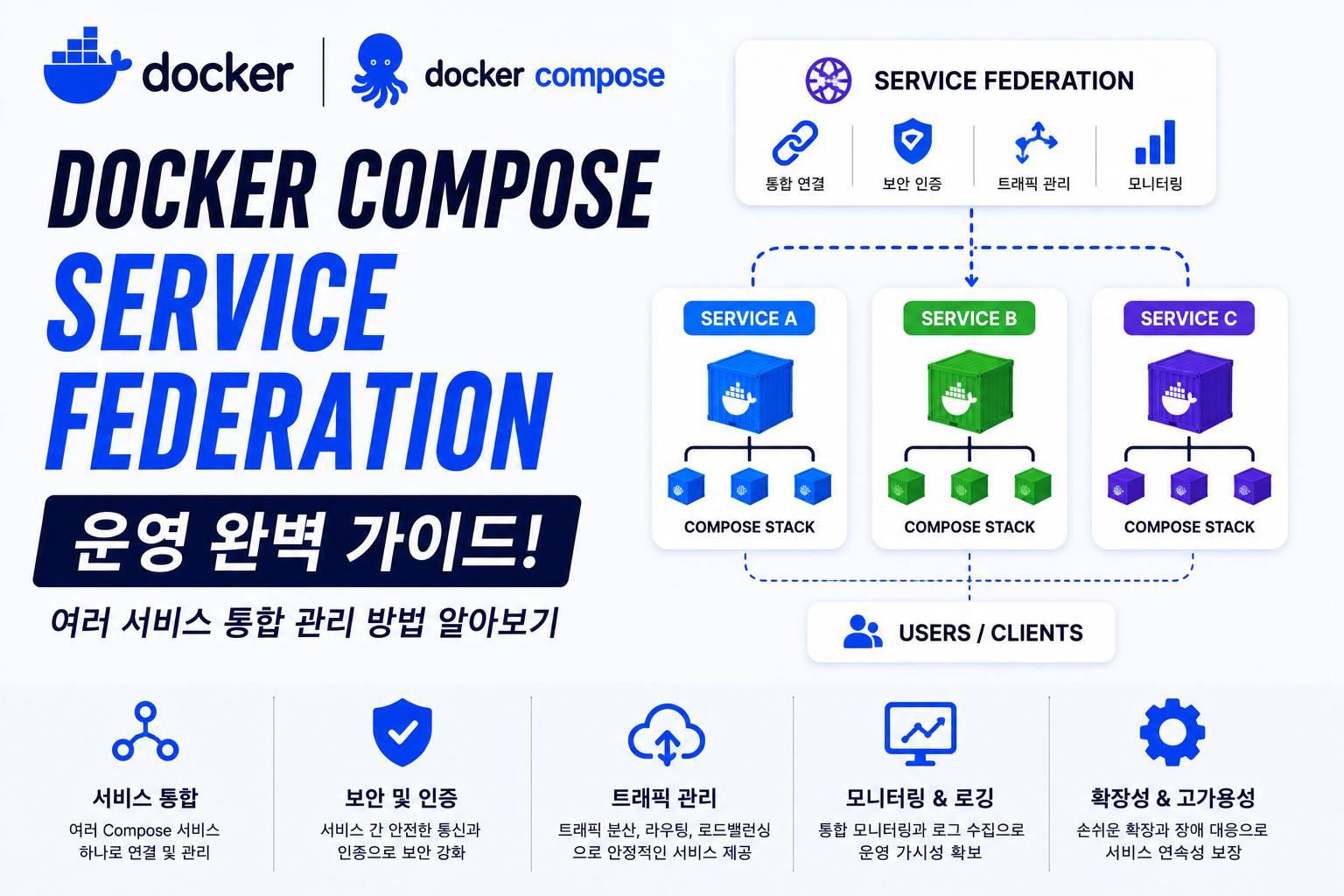
현대적인 Application은 하나의 서비스로 구성되지 않습니다.
기존 구조:
Frontend

↓

Backend

↓

Database
대규모 환경에서는 여러 개의 독립적인 서비스가 함께 동작합니다.
구조:
User

↓

Frontend Service

↓

API Service

↓

Payment Service

↓

Notification Service

↓

Database
서비스가 증가하면 각각의 Docker Compose 환경을 어떻게 연결하고 관리할지가 중요해집니다.
Service Federation은 여러 독립적인 서비스를 하나의 통합된 시스템처럼 운영하는 방식입니다.
이번 글에서는 Docker Compose Service Federation 개념부터 서비스 연결, API 통합, Network 구성, 인증 관리, Microservice 운영 구조까지 알아보겠습니다.
Service Federation이란 무엇인가?
Service Federation은 여러 개의 독립된 서비스를 연결하여 하나의 서비스 환경처럼 운영하는 구조입니다.
기본 구조:
Service A

+

Service B

+

Service C

↓

통합 Application
목표:
서비스 분리

↓

독립 운영

↓

통합 관리
Docker Compose 환경에서 Federation이 필요한 이유
작은 서비스:
하나의 Compose File

↓

전체 서비스 관리
대규모 서비스:
Frontend Compose

Backend Compose

Payment Compose

Analytics Compose
문제:
- 서비스 증가
- 배포 복잡성 증가
- 관리 어려움
Federation 구조:
각 서비스 독립 운영

↓

필요할 때 연결
Docker Compose Service Federation 구조
기본 구조:
                 User

                  ↓

              API Gateway

                  ↓

--------------------------------

Frontend Service

Backend Service

Payment Service

Auth Service

Notification Service

--------------------------------

                  ↓

             Database System
각 서비스는 독립적인 Docker Compose Stack으로 운영할 수 있습니다.
Docker Compose Service 분리 전략
서비스별 분리:
Frontend Service
담당:
- Web UI
- Static Content
구조:
Frontend ContainerBackend Service
담당:
- Business Logic
- API
구조:
Backend ContainerDatabase Service
담당:
- Data Storage
구조:
Database ContainerDocker Compose Service Network Federation
서비스 간 통신이 필요합니다.
구조:
Frontend Network

↓

Backend Network

↓

Database Network
방법:
- Internal Network
- API Communication
- Service Discovery
Docker Compose API Gateway 통합
여러 서비스를 연결할 때 API Gateway를 사용합니다.
구조:
Client

↓

API Gateway

↓

-----------------

User Service

Payment Service

Order Service

-----------------
역할:
- Routing
- Authentication
- Rate Limit
- Logging
Docker Compose Service Discovery
서비스가 많아지면 위치 관리가 필요합니다.
기본:
Service IP 직접 입력문제:
Container 변경

↓

IP 변경
해결:
Service Name

↓

자동 연결
Docker Compose Authentication Federation
여러 서비스에서는 인증 공유가 필요합니다.
구조:
User Login

↓

Authentication Service

↓

Token 발급

↓

각 Service 사용
사용:
- JWT
- OAuth
- Identity Provider
Docker Compose Service Communication
통신 방식:
REST API
Service A

↓

HTTP Request

↓

Service B
Message Queue
Service A

↓

Message Broker

↓

Service B
장점:
- 느슨한 결합
- 안정적인 처리
Docker Compose Event Driven Federation
이벤트 기반 구조:
Order Service

↓

Event 발생

↓

Payment Service 처리
장점:
- 확장성
- 비동기 처리
Docker Compose Federation Monitoring
여러 서비스를 통합 모니터링해야 합니다.
구조:
Service A Log

Service B Log

Service C Log

↓

Central Monitoring
확인:
- Service 상태
- API Latency
- Error Rate
Docker Compose Federation Security
서비스가 많아질수록 보안 관리가 중요합니다.
관리:
- Service Authentication
- Network Isolation
- Secret Management
- Access Control
구조:
Service Request

↓

Security Check

↓

Service Communication
Docker Compose Federation Deployment
배포 구조:
Service Repository

↓

CI/CD

↓

Frontend Deploy

↓

Backend Deploy

↓

Database Migration
장점:
- 독립 배포
- 장애 영향 감소
Docker Compose Enterprise Federation 구조
기업 환경:
                    User

                     ↓

                API Gateway

                     ↓

---------------------------------

Frontend Service

User Service

Order Service

Payment Service

Notification Service

Analytics Service

---------------------------------

                     ↓

              Database Cluster

                     ↓

              Monitoring System
Service Federation Best Practice
추천:
서비스 독립 운영
각 서비스 배포 분리
명확한 API 정의
서비스 간 의존성 관리
중앙 Monitoring
전체 상태 확인
Secret 중앙 관리
인증 정보 보호
자동 배포 적용
운영 자동화
자주 묻는 질문
Docker Compose에서도 Microservice 운영이 가능한가요?
가능합니다. 여러 Compose Stack을 서비스별로 운영하고 API Gateway로 연결할 수 있습니다.
Federation과 Microservice는 같은 개념인가요?
아닙니다. Microservice는 서비스 구조이고 Federation은 여러 서비스를 연결하는 운영 방식입니다.
모든 서비스를 분리해야 하나요?
아닙니다. 서비스 규모와 운영 목적에 따라 분리합니다.
Service Federation의 장점은 무엇인가요?
서비스 독립성, 확장성, 장애 격리를 높일 수 있습니다.
마무리
Docker Compose Service Federation은 여러 Container 서비스를 독립적으로 운영하면서 하나의 통합 시스템처럼 연결하는 고급 운영 구조입니다.
최종 구조:
User

↓

API Gateway

↓

Multiple Services

↓

Database

↓

Monitoring
Production 환경에서는 모든 서비스를 하나의 큰 시스템으로 관리하기보다 독립적인 서비스로 나누고 안정적으로 연결하는 구조가 중요합니다.
다음 글에서는 온프레미스와 Cloud 환경을 연결하는 Docker Compose Hybrid Cloud 운영 방법을 알아보겠습니다.