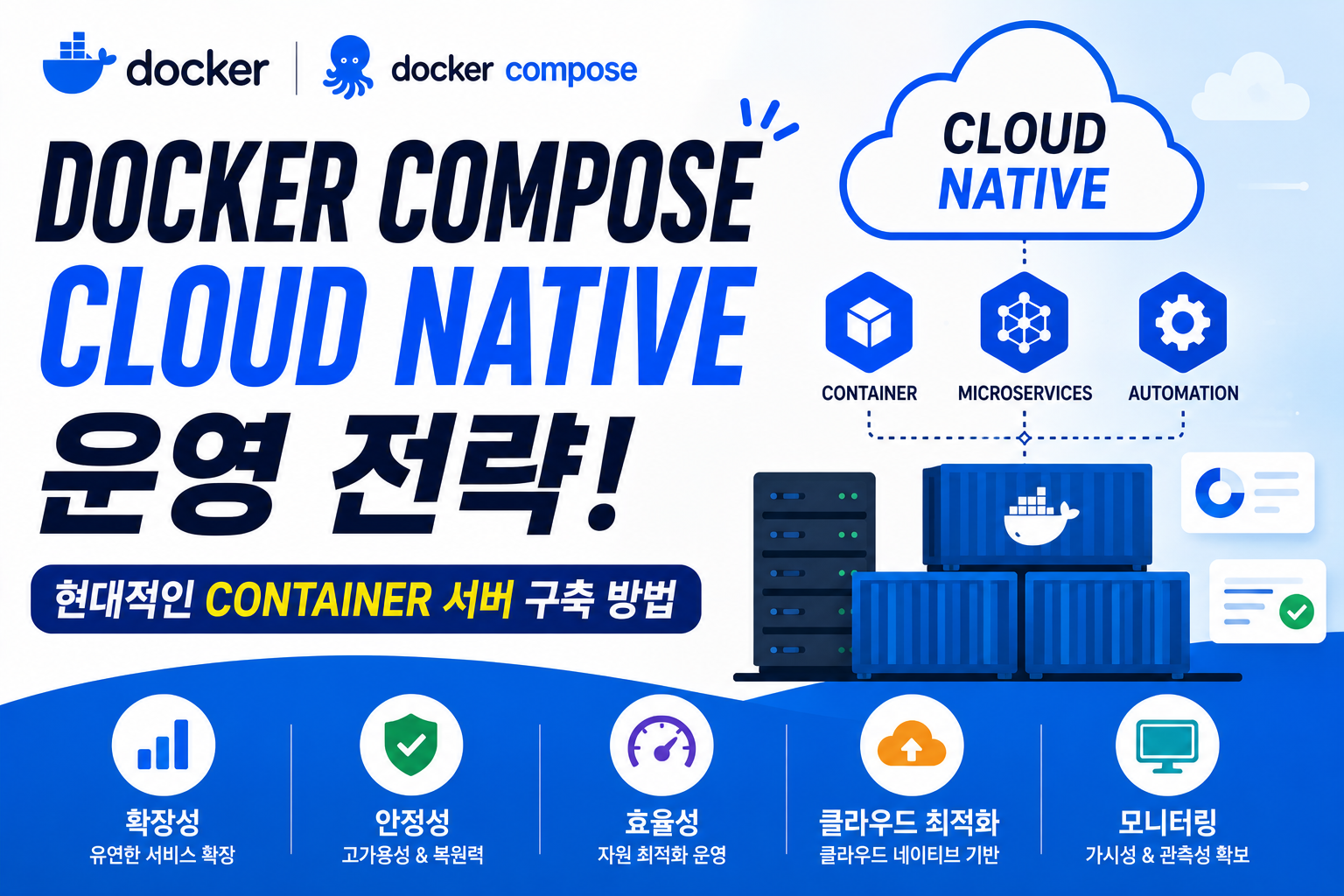
최근 서버 운영 환경은 단순히 Application을 실행하는 방식에서 벗어나 자동화, 확장성, 안정성을 중심으로 변화하고 있습니다.
이러한 현대적인 운영 방식을 Cloud Native라고 합니다.
기존 서버 구조:
서버

↓

Application 설치

↓

직접 관리
Cloud Native 구조:
Container

↓

Automation

↓

Scaling

↓

Monitoring

↓

Cloud Infrastructure
Cloud Native 환경에서는 Application을 Container 단위로 관리하고 자동 배포, 자동 복구, 확장 가능한 구조를 만듭니다.
이번 글에서는 Docker Compose 환경에서 Cloud Native 개념부터 Container 설계, Stateless Application, CI/CD, Monitoring, Kubernetes 연결까지 알아보겠습니다.
Cloud Native란 무엇인가?
Cloud Native는 Cloud 환경에 최적화된 Application 운영 방식입니다.
핵심 요소:
Container

Microservice

Automation

DevOps

Monitoring
목표:
빠른 배포

↓

높은 안정성

↓

쉬운 확장
기존 서버 운영과 Cloud Native 비교
기존 방식:
서버 생성

↓

프로그램 설치

↓

환경 설정

↓

서비스 실행
문제:
- 환경 차이 발생
- 배포 느림
- 복구 어려움
Cloud Native:
Code

↓

Container Image

↓

Deployment

↓

Running Service
장점:
- 동일 환경 유지
- 빠른 배포
- 자동화 가능
Docker Compose와 Cloud Native 관계
Docker Compose는 Cloud Native 구조의 시작 단계입니다.
흐름:
Application

↓

Docker Image

↓

Docker Compose

↓

Kubernetes

↓

Cloud Native Platform
Docker Compose에서 배우는 개념:
- Container
- Network
- Volume
- Environment
- Service
이 개념들은 Kubernetes에서도 그대로 연결됩니다.
Cloud Native Container 설계
좋은 Container는 하나의 역할만 담당합니다.
좋은 구조:
Application Container

↓

하나의 기능 수행
나쁜 구조:
하나의 Container

↓

Web

↓

Database

↓

Cache
원칙:
- 하나의 Process
- 작은 Image
- 환경 분리
- 쉽게 교체 가능
Stateless Application 구조
Cloud Native에서 가장 중요한 개념 중 하나는 Stateless입니다.
Stateful:
Container

↓

내부 데이터 저장
문제:
Container 이동 어려움
Stateless:
Container

↓

외부 Storage 사용
장점:
- Scaling 가능
- 장애 복구 쉬움
- Migration 쉬움
Docker Compose Stateless 구조
좋은 구조:
Application Container

↓

Database

↓

Storage
Container 내부:
코드만 존재데이터:
External Volume

↓

Database
Cloud Native 환경 변수 관리
환경 설정은 코드와 분리해야 합니다.
비추천:
소스 코드

↓

비밀번호 포함
권장:
Environment

↓

Secret Manager

↓

Application
관리:
- Database URL
- API Key
- Token
Docker Compose Cloud Native CI/CD 구조
자동화 Pipeline:
Developer

↓

Git Push

↓

CI Test

↓

Docker Build

↓

Registry

↓

Deploy

↓

Monitoring
장점:
- 빠른 배포
- 오류 감소
- 반복 작업 제거
Cloud Native 자동 Scaling
Cloud Native 환경에서는 서비스 부하에 따라 확장합니다.
구조:
Traffic 증가

↓

Monitoring

↓

Container 증가
예:
Application 3개

↓

Application 10개
Cloud Native Monitoring
운영에서 Monitoring은 필수입니다.
확인:
Application:
- Response Time
- Error
Container:
- CPU
- Memory
Infrastructure:
- Network
- Disk
구조:
Service

↓

Metrics

↓

Monitoring

↓

Alert
Cloud Native Logging 구조
Container가 많아지면 중앙 Log 관리가 필요합니다.
구조:
Container 1

Container 2

Container 3

↓

Log System
장점:
- 장애 분석
- 검색
- 기록 관리
Cloud Native Security 구조
보안 계층:
Container:
- Image Scan
- 최소 권한
Network:
- Private Network
- Firewall
Access:
- Authentication
- Secret 관리
구조:
User

↓

Security Layer

↓

Application
Cloud Native Backup 전략
Container는 쉽게 재생성할 수 있지만 데이터는 보호해야 합니다.
Backup 대상:
- Database
- Volume
- Configuration
- Secret
구조:
Production

↓

Backup

↓

Recovery
Docker Compose에서 Cloud Native로 발전 과정
단계:
1단계:
Docker Container
Application Container2단계:
Docker Compose
Multi Container3단계:
Cluster
Multiple Server4단계:
Kubernetes
Orchestration5단계:
Cloud Native
Enterprise PlatformCloud Native Production 구조
최종 구조:
User

↓

CDN

↓

Load Balancer

↓

API Gateway

↓

Container Platform

↓

Microservice

↓

Database

↓

Storage

↓

Monitoring

↓

Security
Cloud Native 운영 Best Practice
추천:
- Container Stateless 설계
- Image Version 관리
- CI/CD 자동화
- Monitoring 구축
- Secret 관리
- Backup 운영
- 자동 Scaling 준비
자주 묻는 질문
Docker Compose도 Cloud Native인가요?
Docker Compose 자체는 시작 단계이며 Kubernetes와 결합하면 Cloud Native 운영 구조로 확장할 수 있습니다.
Cloud Native에서 가장 중요한 것은 무엇인가요?
자동화, 확장성, 안정적인 운영 구조입니다.
Container만 사용하면 Cloud Native인가요?
아닙니다.
Container는 구성 요소 중 하나이며 Automation과 운영 방식까지 포함합니다.
작은 서비스에도 Cloud Native 구조가 필요한가요?
전체 구조를 적용하기보다 필요한 기능부터 단계적으로 적용하는 것이 좋습니다.
마무리
Docker Compose Cloud Native 운영 전략은 단순한 Container 실행을 넘어 안정적이고 확장 가능한 서버 환경을 만드는 과정입니다.
최종 흐름:
Docker Compose

↓

Microservice

↓

Kubernetes

↓

Automation

↓

Cloud Native

↓

Enterprise 운영
Docker Compose에서 익힌 Container, Network, Volume, Service 개념은 이후 Kubernetes와 Cloud Native 환경의 기본이 됩니다.
다음 글에서는 Microservice 외부 요청을 관리하는 핵심 구조인 Docker Compose API Gateway 구성 방법을 알아보겠습니다.